
Eno Center for Transportation
2018 Impact Report
Next year is the Eno Center for Transportation’s 98th since our founding. Despite our age, Eno strives to remain relevant and ahead of the curve in the ever-evolving world of transportation. We did this in 2018 by embracing the notion that exciting change is underway, yet remaining fully rooted in the realities of what is possible and with eyes wide open about what is not.
Of course, technological change is evident throughout the built environment. In recent months, Eno and our partners tackled these critical issues head-on and will continue this collaborative work on automated vehicles, TNCs, micromobility, data sharing, and more. Importantly, we look forward to the launch of a major initiative to integrate unmanned aerial systems into U.S. airspace.
Transportation funding challenges will loom even larger this year and Jeff Davis and Eno Transportation Weekly will relentlessly chronicle discussions of a federal infrastructure package and track the approaching shortfalls. Outside of Washington, last year we conducted groundbreaking work to catalogue transportation at the ballot box in states from coast-to-coast. And we’ll continue our efforts to decongest cities through pricing strategies while ensuring the benefits of doing so are shared across regions.
Throughout our long history, Eno has been at the forefront of transportation workforce issues with our coursework, training, and research. We intend to kick off an important initiative to address a set of thorny challenges facing the transportation workforce as well as predicted changes.
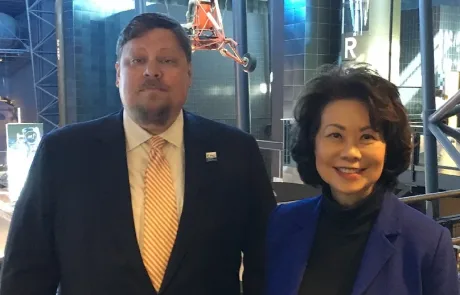
Sec. Chao with Eno's Jeff Davis
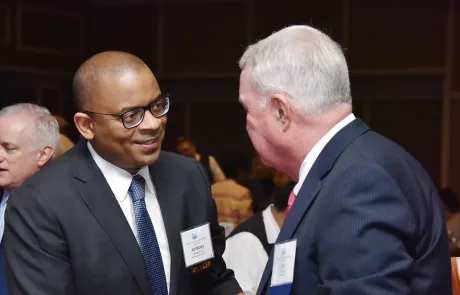
Leadership Awards Reception
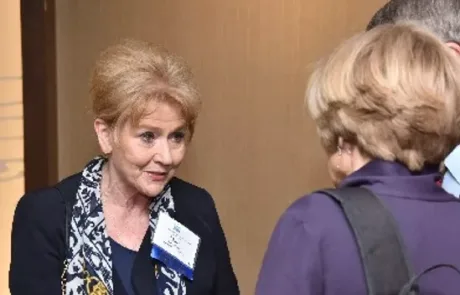
Leadership Awards Reception
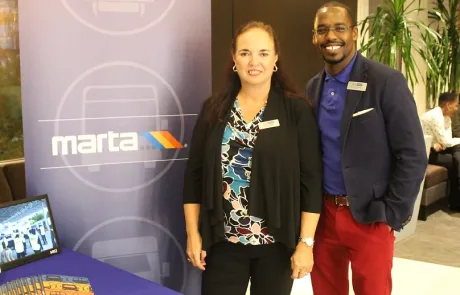
2018 MAX Program

Alumni Reception @ APTA Annual
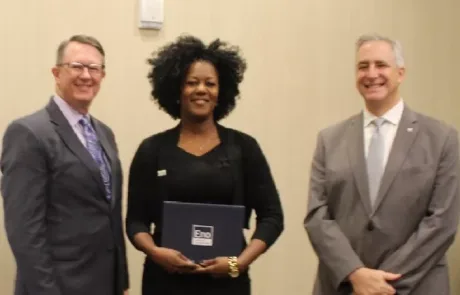
2018 MAX Graduation
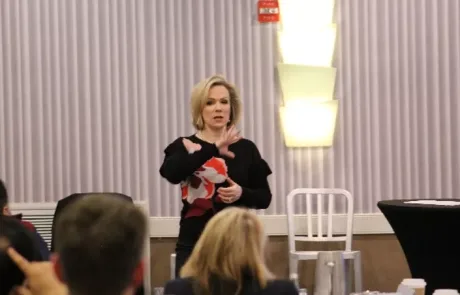
Katherine Eagan Kelleman @ MAX

Eno MAX Graduation
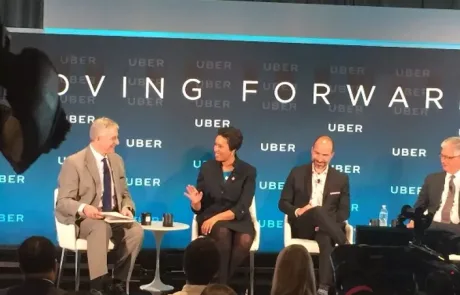
Uber Panel in DC

2018 Future Leaders Conference
With several extreme weather events highlighting the paramount importance of resiliency of transportation infrastructure, Eno will work with our partners to understand how transportation can better withstand shocks and stresses and reduce the overall impact of transportation on the environment.
Underlying much of our work is a focus on governance and institutions. New kinds of partnerships, relationships, and arrangements are widespread in transportation and Eno is already planning major work in 2019 to address a range of social, political, and economic issues inherent in transportation decision-making.
As we like to point out, partnerships and collaborations are part of the DNA of this organization. We rarely work on anything alone and certainly don’t operate with our doors closed. In this way, all our successes are shared and we look forward to strengthening those relationships in 2019.


Robert Puentes
President & CEO


James Burnley
Board Chairman
Table of Contents
Leading the Conversation on
Tech-Enabled Transformation
Eno remains engaged with stakeholders and researchers in the area of technology-enabled transportation innovation and solutions through research reports, webinars, ETW articles, and face-to-face interactions. Experts from academia as well as the public and private sectors contributed to ETW op-eds and webinars covering topics such as data sharing; safety and accessibility for people with disabilities in the context of automated vehicles; new mobility; shared fleets, and connected vehicles.
Trends in transportation and technology continuously evolve, and some last longer than others. Eno stayed on top of the rise of dockless bikeshare to its replacement of other shared electric micromobility options.
Check Out our 2018 Webinars Featuring
Transformational Technology in Transportation
Up to Date Reporting and Analysis
Under Senior Fellow and Editor Jeff Davis, ETW continues to be the leading voice for transportation insights both inside and outside the Beltway, serving as an indispensable source for government affairs professionals, Congressional staff, the U.S. Department of Transportation, and agencies across the Executive Branch.
2018 Most Read Articles:
Automated Vehicle Policy
2018 Most Read Articles:
Transportation Technologies
2.
3 Ways that Cities Can Prepare for Automated Vehicles Today
By: Greg Rogers
1.
Guest Op-Ed: How Los Angeles is Adapting Urban Mobility for our Digital Age
By: Seleta Reynolds, LA DOT
2.
Guest Op-Ed: Mobility-as-a-Service: Coming to a City Near You Soon…
By: Andy Taylor, Cubic Transportation Systems



Hillary Cain, Toyota
2019: A Look Ahead
Led by former Senator Byron Dorgan and former Secretary of Transportation Jim Burnley, Eno’s Aviation Working Group is composed of individuals from the aviation industry, academia, government, and the larger business community. From Eno’s foundational work on air traffic control reform to airport privatization and workforce challenges, the Aviation Working Group contributes to Eno’s influential research to shape public policy.
Starting in 2019, we will undertake a new initiative focused on integrating autonomous and unmanned aircraft systems (UAS) into the national airspace. While many of these UAS are still in the development stage, federal action has been slow to develop. The time is ripe for the formation of new transportation policy on integrating autonomy into U.S. airspace and Eno’s Working Group is ideally positioned to lead the effort.
The Eno Center for Transportation is the right organization to convene the disparate stakeholders in this conversation together to tackle this new frontier in aviation and help shape the future of the FAA. Eno’s multi-year initiative will lay out a comprehensive policy agenda for the federal government. It will provide an evidence-based, stakeholder-led path forward to ensure that America maintains both its competitive edge and stellar safety record. Through its long-standing Aviation Working Group, Eno will apply knowledge, experience, and resources to make strategic recommendations that will help transform the field.
Eno is leading the research efforts for one of the FTA’s Mobility on Demand (MOD) Sandbox projects harnessing the technology and services of transportation network companies (TNCs) to connect people to public transit. The federally and locally supported first-mile-last-mile shared ride service will operate in the Los Angeles and Puget Sound Regions through a collaborative effort including LA Metro, King County Metro, Sound Transit, and Via. The agencies aim to harness the mobility benefits provided by TNCs, open them up for a larger group of users, and direct them towards existing facilities including bus, light rail, and heavy rail.
Eno is working with the University of California, Los Angeles, The University of Washington, and The University of Oregon to conduct independent analysis and peer reviewed research that will:
-
Demonstrate if and how TNCs can be used as effective feeders into the rapid transit system, who can benefit from the program, and how it compares to existing transit services;
-
Identify how the public and private partners can provide cost-effective service to individuals with various needs including people with varying household incomes, access to vehicles, and physical abilities; and
-
Create recommendations for future pilots and programs that use TNCs as a tool for transit services with a focus on policy topics such as procurement, planning, fare integration, and data sharing.
Automated vehicles (AVs) could completely transform mobility networks, dramatically improve safety, reduce emissions, and provide access and mobility to underserved parts of society. Eno was at the forefront of automated vehicle policy. Through a series of panel discussions, workshops, webinars, and consultation with Eno’s Digital Cities Advisory Board, Eno crafted a multifaceted set of recommendations that address the most pressing policy issues for AVs. These recommendations were released in Beyond Speculation: Automated Vehicles and Public Policy and Adopting and Adapting: States and Automated Vehicles. In 2019, we will update our research to address recent developments and provide recommendations for a path forward to comprehensive automated vehicle policies.
Eno continues to provide our extensive network of practitioners and policymakers in the field with education and advice based on the findings and recommendations in these papers. We have presented policy recommendations to leaders in dozens of conferences, panels, keynotes, and virtual events to educate them about both the technology and policies. We will continue to educate, especially on the federal level, to ensure Congress members and their staff are making informed policy decisions.
Eno will build on our successful peer exchanges to host a quarterly virtual Innovation Exchange. This continuing education speaker series will invite a speaker who is implementing an innovative idea at their agency. These Exchanges will be interactive and focus on lessons learned from the implementation and provide advice to others considering similar programs. These forums provide an opportunity to build a network with others in the field working on comparable innovations.
The Exchanges will focus on an expert speaker, who will discuss their idea and then open the floor to the group for discussion and idea sharing. Given the sensitive nature of the information shared, they are open only to Eno members and alumni and are limited in participation.
Governance Reform
For an Evolving Transportation Industry
Eno has long been engaged in issues of good governance in transportation authorities across the country and at all levels of governments. From our influential work on air traffic control reform to our recent research on governance structures at transit agencies, Eno has been a trusted source of recommendations for elected officials, state and city DOT leadership, transit agencies, airports, port authorities, and MPOs.
Airport Governance: Principles for Privatization

In 2018, Eno continued our work in this area by taking a fresh look at the policies that govern airport privatization in the United States, recent history in domestic case studies, and the implications going forward. Our report, Deal or No Deal: Prospects for Airport Privatization in the United States found that, in the end, circumstances unique to the United States greatly limit the usefulness of privatization in solving airport problems. While privatization may be attractive in some circumstances, policymakers first need to clearly understand the problem they are trying to solve, and whether privatization is the best approach. Our work on airport governance and public/private partnerships helped inform the conversation as Congress considered revised rules to the Airport Privatization Pilot Program in 2018.
Reform Recommendations in FAA Reauthorization
Safety is the FAA’s most important mission. The 2018 reauthorization directly addressed safety certification to adapt to a rapidly-changing industry. In 2017, Eno, with input from our Aviation Working Group, released a comprehensive new report—Safer, Faster, Cheaper: Aviation Certification for the 21st Century—that made the case for an updated, streamlined federal process that was more flexible and agile. The overarching goal is to shift the FAA’s focus from simply complying with prescriptive government mandates (outputs), to the impacts of the requirements (outcomes). We are pleased that many of these performance-based recommendations are part of the final legislation passed in 2018.
Importantly, our 2017 report urges the FAA to develop better metrics in order to measure the impact of the certification process. We called for the creation of a body to provide advice and recommendations to the Transportation Secretary on issues of safety certification. The 2018 law creates a Safety Oversight and Certification Advisory Committee (SOCAC) and directs it to, among other things, apply and track performance metrics. Related is our call for standardized education and testing of certification engineers and the law’s requirement for a procedures manual and centralized office at the FAA to ensure consistency.
Looking ahead, the Eno report also recommended that, when inevitably certifying new airspace products or users like drones, the FAA should not let itself fall into the tradition of mandating designs. Instead, it should work with the industry to develop performance standards that allow drones and space vehicles to safely operate and integrate into the national airspace, while allowing innovative solutions that account for technological advances. Here again, the focus should be on the outcomes and the law directs the FAA to develop a process for accepting risk-informed safety standards for UAS. How the FAA develops this process is critically important.
Transit Governance + Operations

Eno has been deeply engaged with transit agencies across the country for over a decade through our research, courses and seminars. Together with TransitCenter, Eno published A Bid for Better Transit: Improving Service with Contracted Operations in late 2017. The project examined transit’s policies and practices for utilizing private sector contractors to meet their public sector goals. This report was downloaded over 750 times from our website in 2018 and widely distributed at public transportation industry events. Transit authorities incorporated recommendations from this report into their recent RFPs for service contracts, such as the Washington Metro Area Transit Authority’s 2018 RFP for Silver Line operations.
Following that, in the paper, Tools for a Smoother Ride: Managing Rail Assets and Leveraging Competition, Eno examined rail maintenance program needs resulting in a practical and actionable 5-step process for transit agencies. The process guides agencies to improve their asset management practices to ensure a state of good repair. Through virtual education and Eno’s professional development programs for transit agencies, Eno has already shared the recommendations in the report with hundreds of leaders, to educate and encourage implementation.
Next Up in 2019:
New Governance Models for Sustainable Transportation
America is experiencing a period of disruptive economic, demographic, and technological change. These changes are altering urban-rural relationships, enhancing the economic power of the nation’s major metropolitan regions, exacerbating income inequality, and often isolating communities. Transportation investments and inventions have enabled the nation to respond to great change throughout our history.
Eno will explore relationships between the nation’s principal transportation institutions at the local, state, and regional levels, as well as shifts in patterns of urban mobility, labor market accessibility, and patterns of urban development. Eno seeks to identify policy solutions to the impact of these economic, demographic, and technological changes on the institutions that govern operational and capital decision-making for our transportation system.
Workforce Development
From Research to Professional Development Programs
Across the transportation industry, workforce development issues are at the forefront of executives’ minds. Eno has a long history of developing transportations leaders through our peer exchange programs, Future Leaders Development Conference, and transit leadership courses.

Innovative Peer Exchange to Improve Transit Operations
Innovative Peer Exchange to Improve Transit Operations
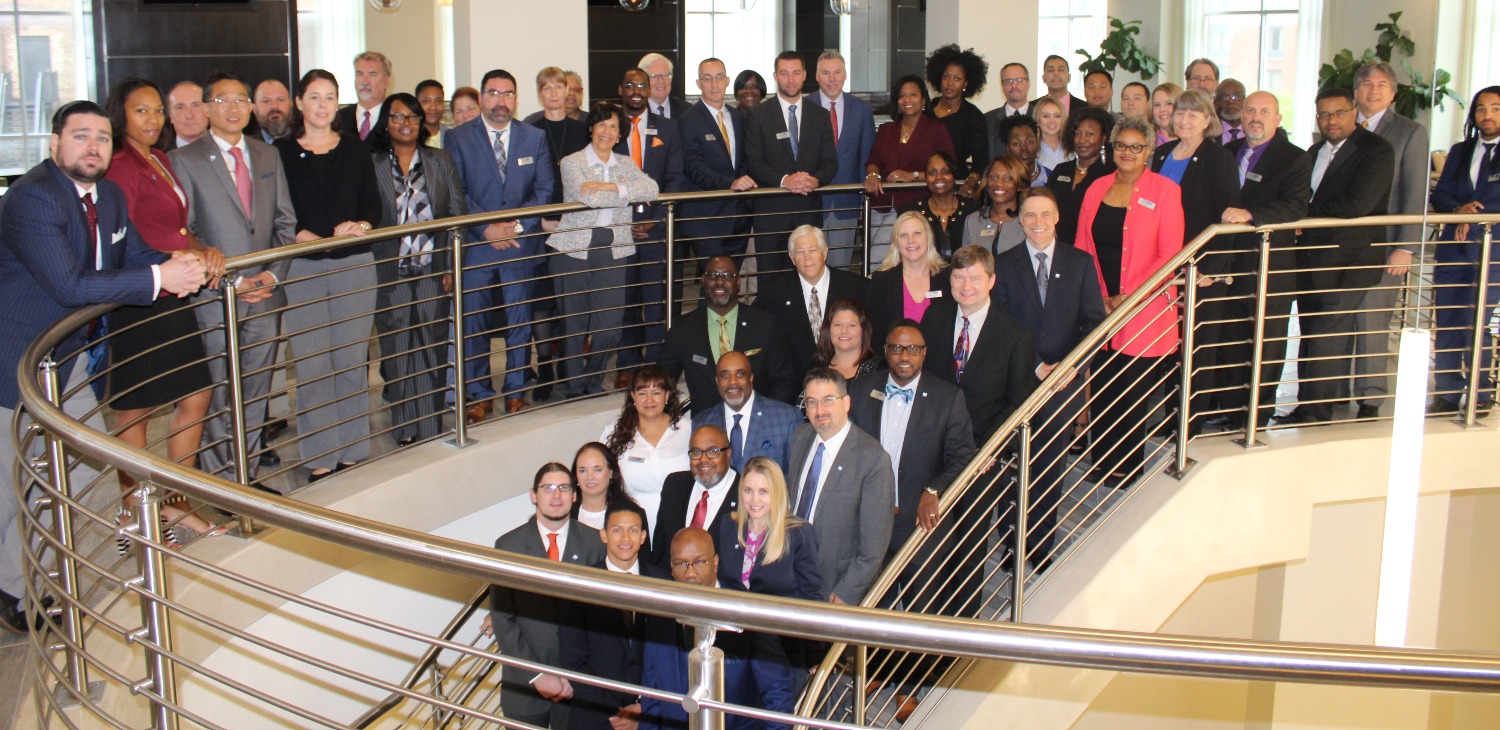
The EnoMAX (Multi-Agency Exchange) Program is a collaborative inter-agency leadership development, networking and best-practice sharing program between public transportation operators and the Eno Center for Transportation.
Founded in 2012, the MAX Program has brought together over 250 professionals from the Regional Transportation District of Denver, Los Angeles County Metropolitan Transportation Authority, the Metropolitan Atlanta Rapid Transit Authority, and the Dallas Area Rapid Transit Authority. In 2016, the Eno Center for Transportation partnered with these agencies to form the EnoMAX Program. Four new agencies have joined since 2017 including Valley Metro (Phoenix), Sound Transit (Seattle), Washington Metropolitan Area Transit Authority and the Charlotte Area Transit System.
These program cohorts learn from each other to improve their technical knowledge and performance, develop a peer-network for collaboration, and better understand their agency as it relates to the overall transit industry. Benefits transfer to the agency as a whole through improved staff performance and innovative, and practical solutions for high priority, agency-defined business problems.
MAX Impact:
Asset Maintenance with Drones
During the 2017 program, two LA Metro participants heard a presentation about the use of drones for asset management purposes while visiting Denver RTD. They were able to meet the person who flies the drones during one of the Meet Your Match sessions, where they had an extended conversation about drone use. Metro had received an unsolicited proposal for drones through the Office of Extraordinary Innovation. They are currently in the process of working with the proposer to come up with a proof of concept to see if the technology is viable for Metro.
Transit Leadership

“I was told that it was great training – both personally and professionally – and that is an understatement. This is my first experience with this type of training since I started in my job and it was long overdue. I can use every part of this in my day-to-day life — inside and outside the workplace.”
2,561
Total Alumni

Courses + Seminars
Eno provides a spectrum of trusted, high-quality leadership courses for the transit industry, from the Transit Mid Manager Seminars to the Transit Senior Executive Program. Each class is customized to fit the participant level and include modules on skills needed to excel.
The Transit Mid Manager Seminars focus on topics such as communications, leadership, change management, coaching/mentoring, delegation, and the critical role that mid-managers play.
The Transit Senior Executive Program focuses on managing board relationships, organizational messaging, generational diversity, safety and security, and crisis management. At the end of the program, students participate in a real-life case study where all these skills are utilized.
We had over twenty top-notch transportation executives speak to the transit classes this year, giving students a plethora of information to take back to their organizations. These executives shared their expertise in the field and gave participants an opportunity to get the real-world view on how to run transit agencies across this country.
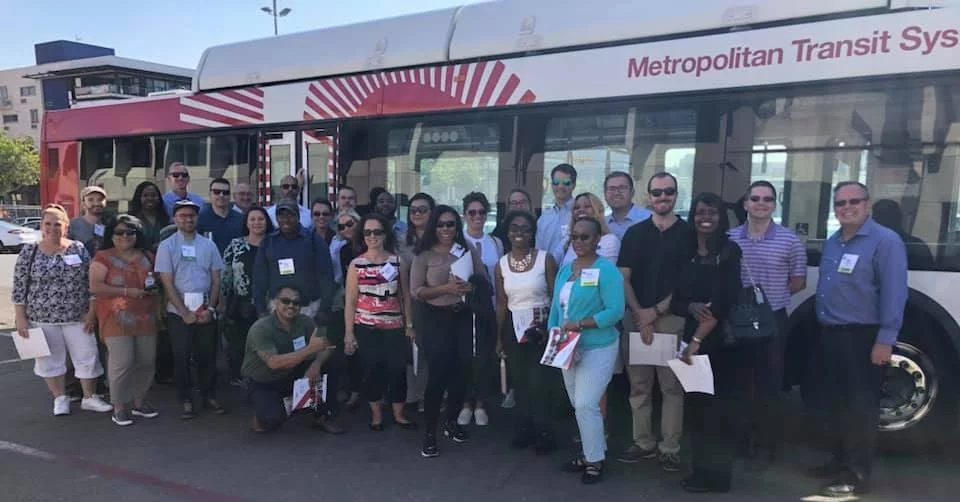
Transit Mid-Manager: San Diego

Transit Mid-Manager II
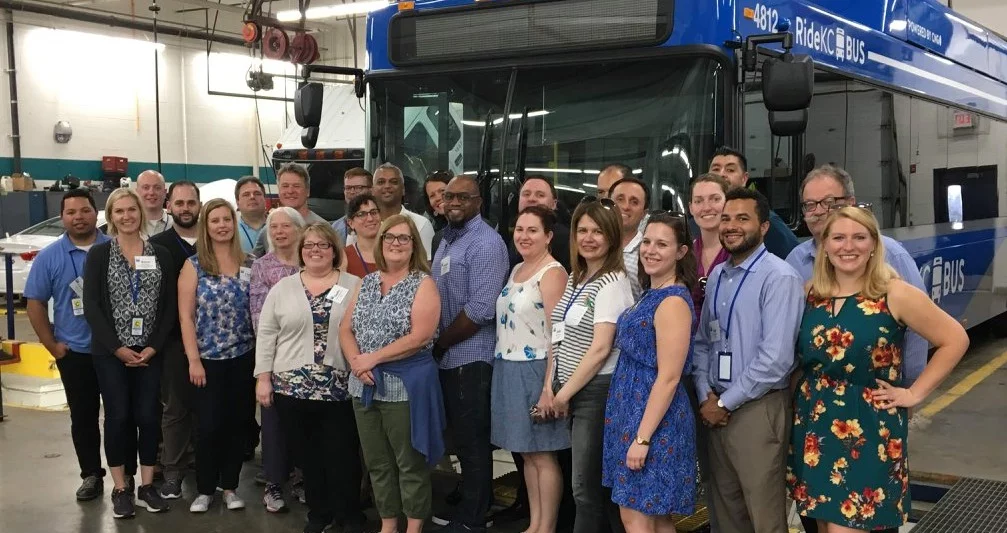
Transit Mid-Manager: Kansas City

Transit Mid-Manager: Jacksonville
NEXT in 2019
Workforce Planning + Development
In 2018, Eno conducted research on two transportation workforce issues that will be released in 2019.
The first project was a synthesis report of the current state of practice for transportation workforce planning and development strategies at state departments of transportation (SDOTs) and associated local and tribal technical assistance programs (LTAPs/TTAPs). This work was funded by the Transportation Research Board’s National Cooperative Highway Research Program, and identified challenges, opportunities, and lessons learned through a literature review, survey, and selected case studies of SDOTs and LTAPs/TTAPs. Findings from this work indicated that there is no clear consensus among states on how to handle workforce challenges, which may be the result difference in institutional structures and variance in funding streams between states. Nevertheless, this synthesis showed activity, interest, and need for continued transportation workforce strategies.
The second project was a review of workforce challenges across the six critical sectors of the aviation industry: professional airplane pilots, air traffic controllers, the aircraft maintenance, repair, and overhaul workforce, airport workers, flight attendants, and the aerospace manufacturing workforce. The report discusses mixed evidence of aviation workforce shortages, but points to the possibility of pipeline challenges, that is, issues that may deter potential workers from pursuing careers in aviation. Additional themes discussed were the changing nature of jobs due to technology, shifting workforce demographics, increased wages, and industry competition with respect to retaining workers.
In 2019 we will build on this work to provide a comprehensive look at the transportation workforce, focused on meeting the five goals below to provide government and industry leaders with timely research and an independent voice on policy issues. Eno will publish rigorous, objective research and analyses, as well as convene cross-sector stakeholders to share their expertise. Based on research, convening, and analysis, Eno will develop actionable recommendations and use our professional development programs to spread ideas for practical implementation. This project will help public and private sector stakeholders understand the current and future needs of the transportation workforce, identify strategies to address skills and knowledge gaps, and diagnose blockages in the talent pipeline for the transportation sector.
One of the distinguishing aspects of Eno’s work is our transparent and collaborative research process. We include diverse stakeholders in the discovery and research process through interviews and roundtable discussions while including our broader network with a comprehensive communication strategy. To ensure the relevance and effectiveness of the Workforce Initiative, Eno will employ the following key strategies:
Key Workforce Initiative Strategies:
Workforce Advisory Board:
Eno will provide a forum for key cross-sector industry stakeholders, including private and public sector leaders, academics, labor, and policymakers to engage in in-depth policy dialogues and provide input to Eno’s independent and rigorous research and policy recommendations.
Data-Driven Assessment
Eno will conduct a data-driven quantitative assessment, including the magnitude of employment in the sector, broken down by mode. The initial analysis of the nation’s transportation workforce challenges and opportunities will serve as a foundational piece for the industry.
In-Depth Analysis of Critical Issues
Eno will provide in-depth analysis for specific focus areas, such as barriers and challenges for underrepresented populations or exploring gaps in education or labor for specific modes. Eno will also catalogue and explore successful solutions and programs to provide valuable insights about how to replicate their success.
Educate + Disseminate
Eno will ensure that the recommendations permeate the transportation industry through educational forums, seminars, and events. Our professional development programs will design relevant presentations, courses and workshops for continuing education programs, conferences, and public forums.
Educating Transportation Professionals about
Critical and Emerging Issues
As the leader in its field for nearly a century, Eno provides government and industry leaders with timely research and a pragmatic, fact-based voice on policy issues. Eno publishes rigorous, objective analyses on the problems facing transportation and provides ideas for and a clear path toward possible solutions. Based on research, convening, and analysis, Eno serves as an unbiased, expert source of information on provocative transportation topics, many of which have not yet been examined with academic rigor or independence.
Up to Date Reporting and Analysis
Under Senior Fellow and Editor Jeff Davis, ETW continues to lead conversation and provide indispensable analysis. ETW is required reading for everyone including state and local leaders, private sector professionals, academics, Congressional staff, the U.S. Department of Transportation, and agencies across the Executive Branch.
Top 10 Most Read Articles in Eno Transportation Weekly
1. Senate Agrees to One-Year Ban on Transit Rail Car and Bus Procurements from Chinese-Owned Companies
By: Jeff Davis, August 2018
By: Jeff Davis, September 2018
By: Greg Rogers, March 2018
By: Jeff Davis, September 2018
By: Jeff Davis, May 2018
By: Seleta Reynolds, March 2018
By: Greg Rogers, January 2018
By: Andy Taylor, February 2018
By: Jeff Davis February 2018
By: Jeff Davis, May 2018

The midterm elections in November 2018 held major political ramifications for the United States given the high-profile Congressional, gubernatorial, statehouse, and mayoral choices American voters considered. But before and during Election Day, voters also played a critical role in shaping communities from coast-to-coast by casting their votes on investments and other decisions about transportation.
Prior to the election, Eno educated stakeholders through a series of podcasts on featuring on-the-ground experts talking about five transportation ballot measures in California, Colorado, Connecticut, Florida, and Missouri. Post-election, Eno continued our work by analyzing the results and providing important insights for future briefs in a Rapid-Response webinar and Eno brief.
In May, Eno began reporting on Congress’s move to pass a one-year ban on any new procurements using FTA funding for mass transit rail cars or buses from companies owned or subsidized by the Chinese government. This ban, an apparent effort to protect domestic freight rail manufacturers, directly affected transit agencies across the country with active procurements. Eno sought to analyze the impact of this ban in our paper, The Implications of the Federal Ban on Chinese Railcars.
The conversation on this issue continues to evolve and Eno’s report is helping to inform the evolving debate. Recently, for example, WMATA became the latest agency to revise its procurement to ensure a greater emphasis on cybersecurity in response to some of the concerns raised.

2018 Webinars on Critical + Emerging Issues
2018 Webinars on Critical + Emerging Issues
Future Leaders Development Conference
Future Leaders Development Conference
“
2018 LDC Fellow
Washington, DC
2018 marked 25 years that Eno has hosted the nation’s top 20 transportation graduate students in Washington, DC to attend the Future Leadership Development Conference (LDC) and become Eno Fellows. During this weeklong, intensive program, the Fellows meet with federal, state, and local officials, as well as public, private, and non-profit leaders across the industry. They get a first-hand look at how transportation policy is made, while engaging with leaders to discuss the latest developments and trends in the industry.

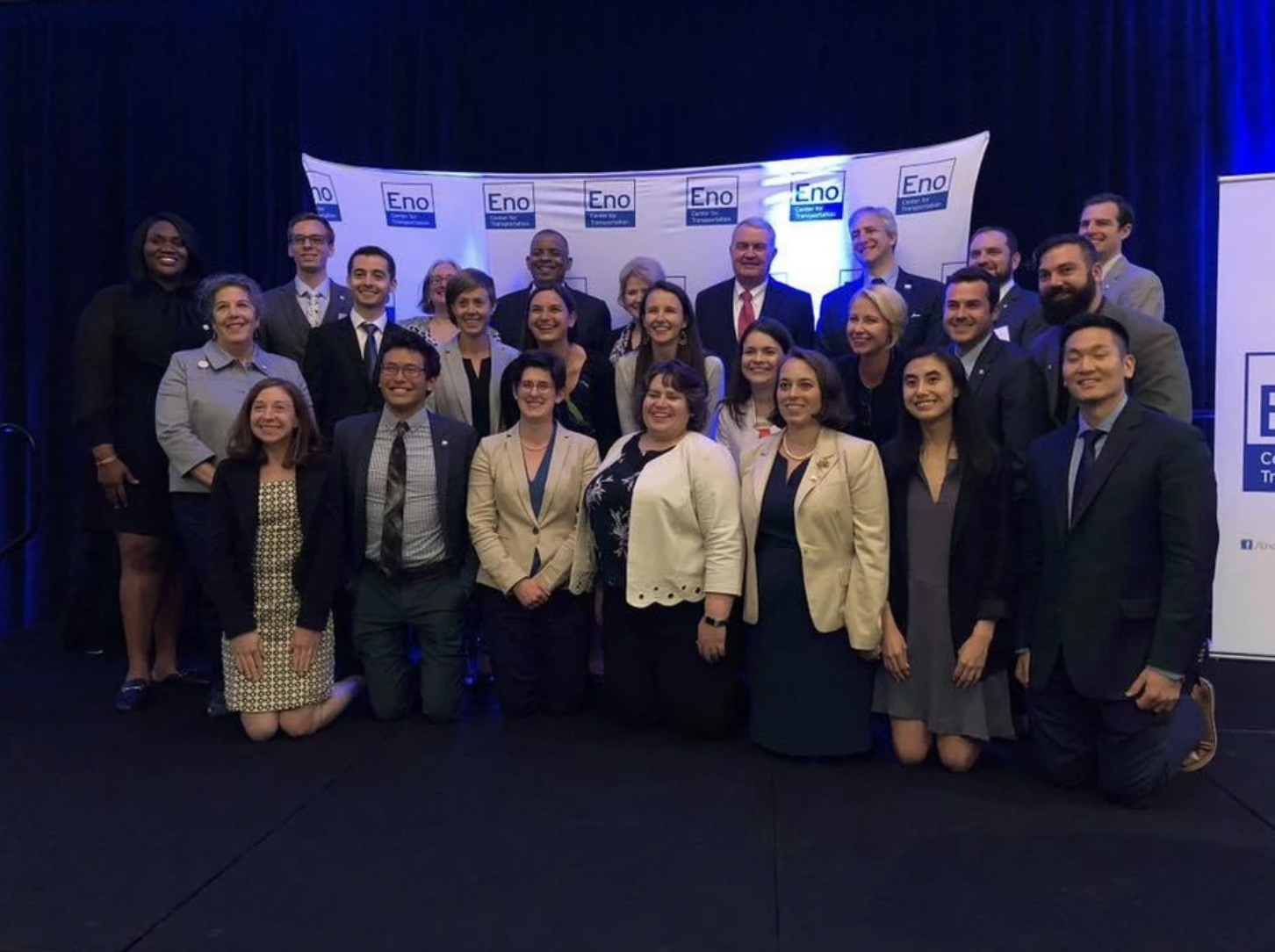


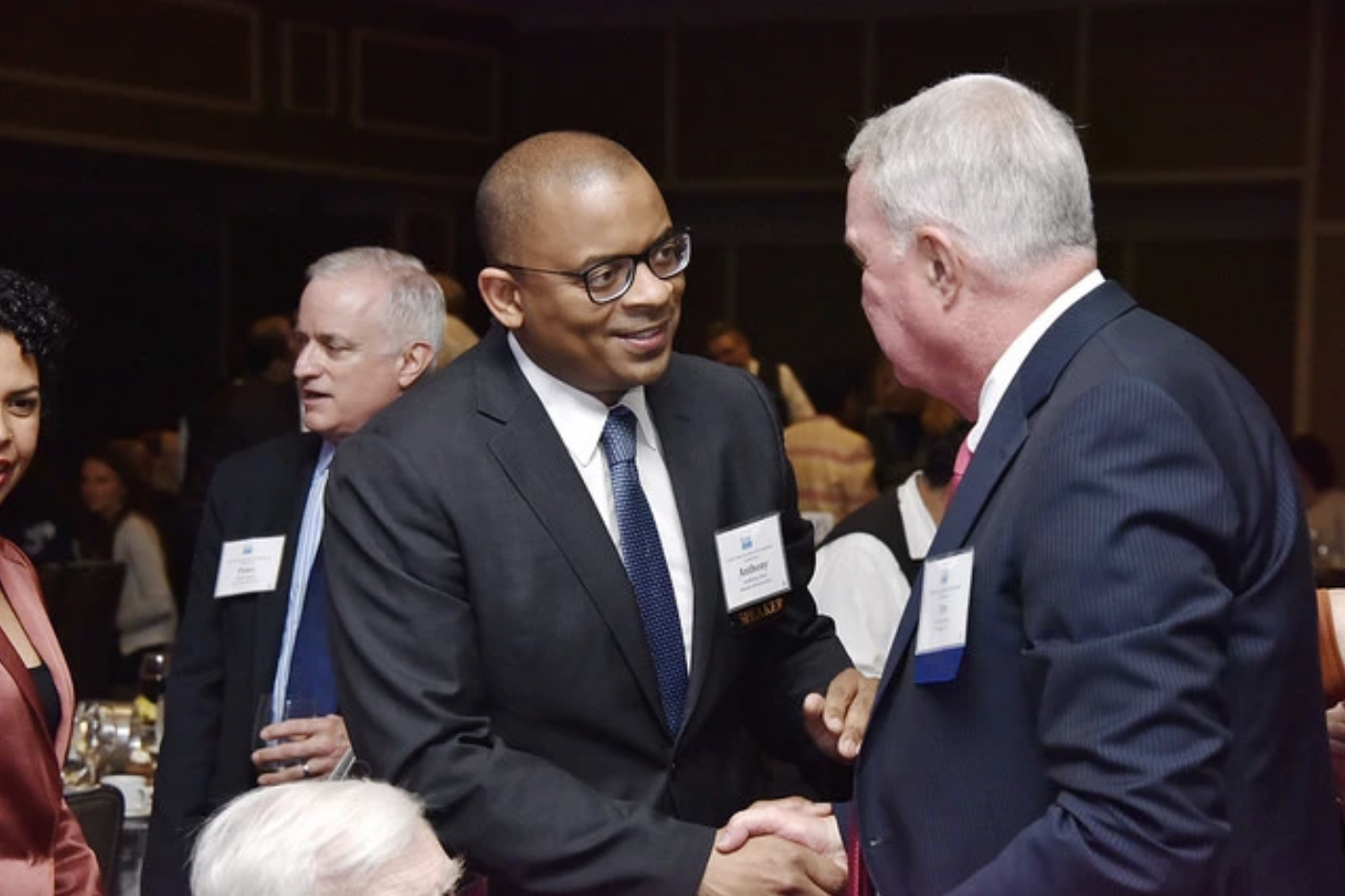

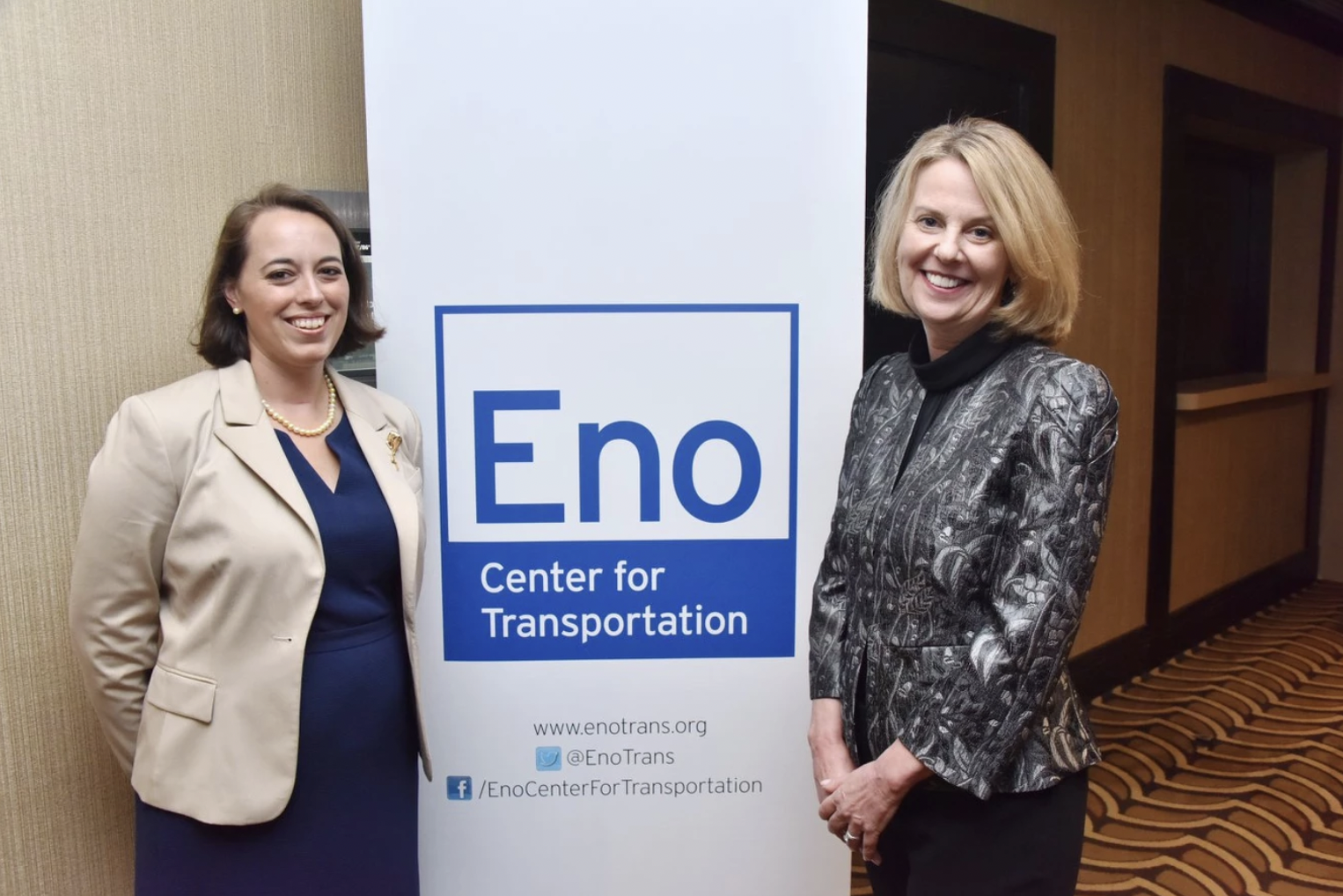

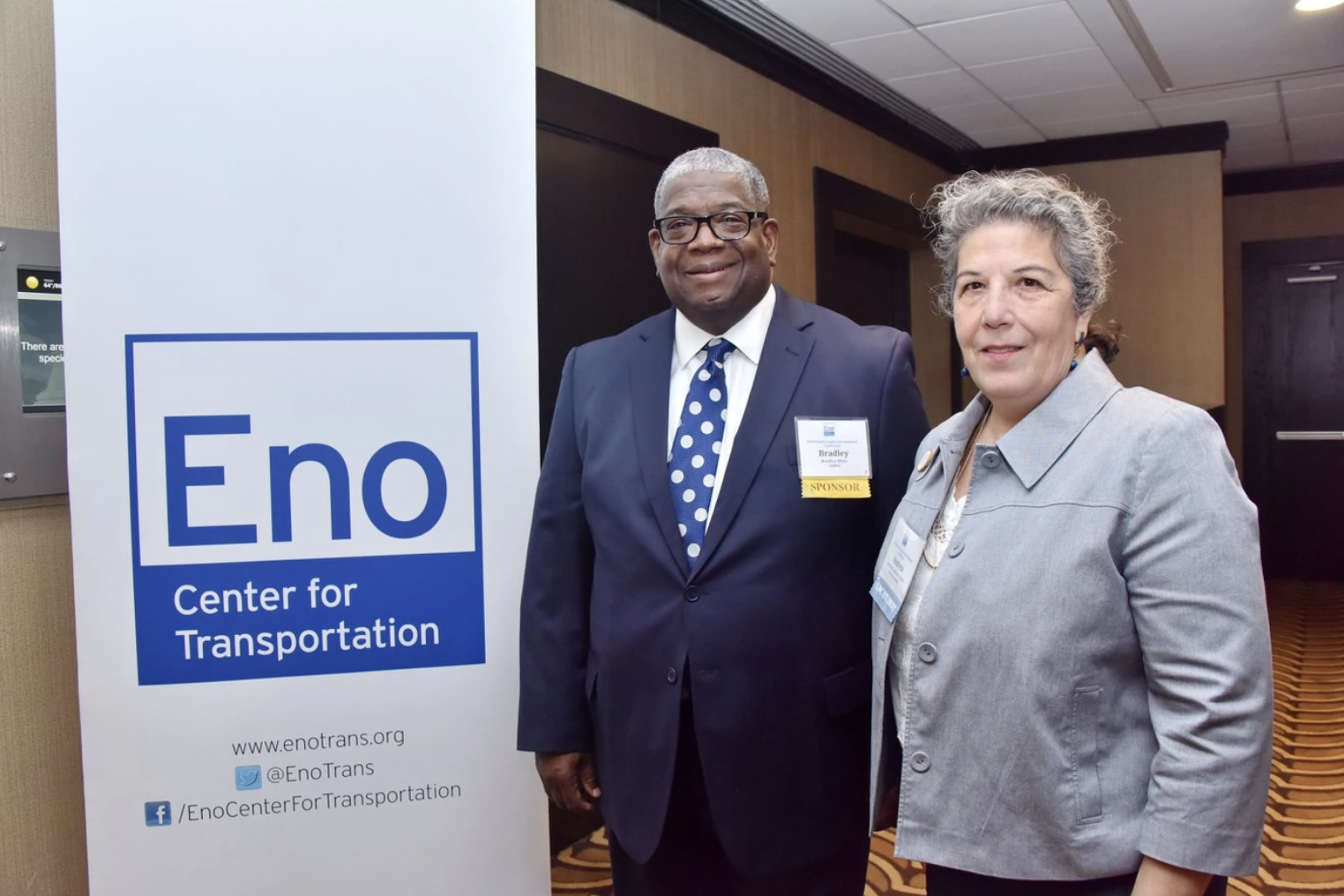
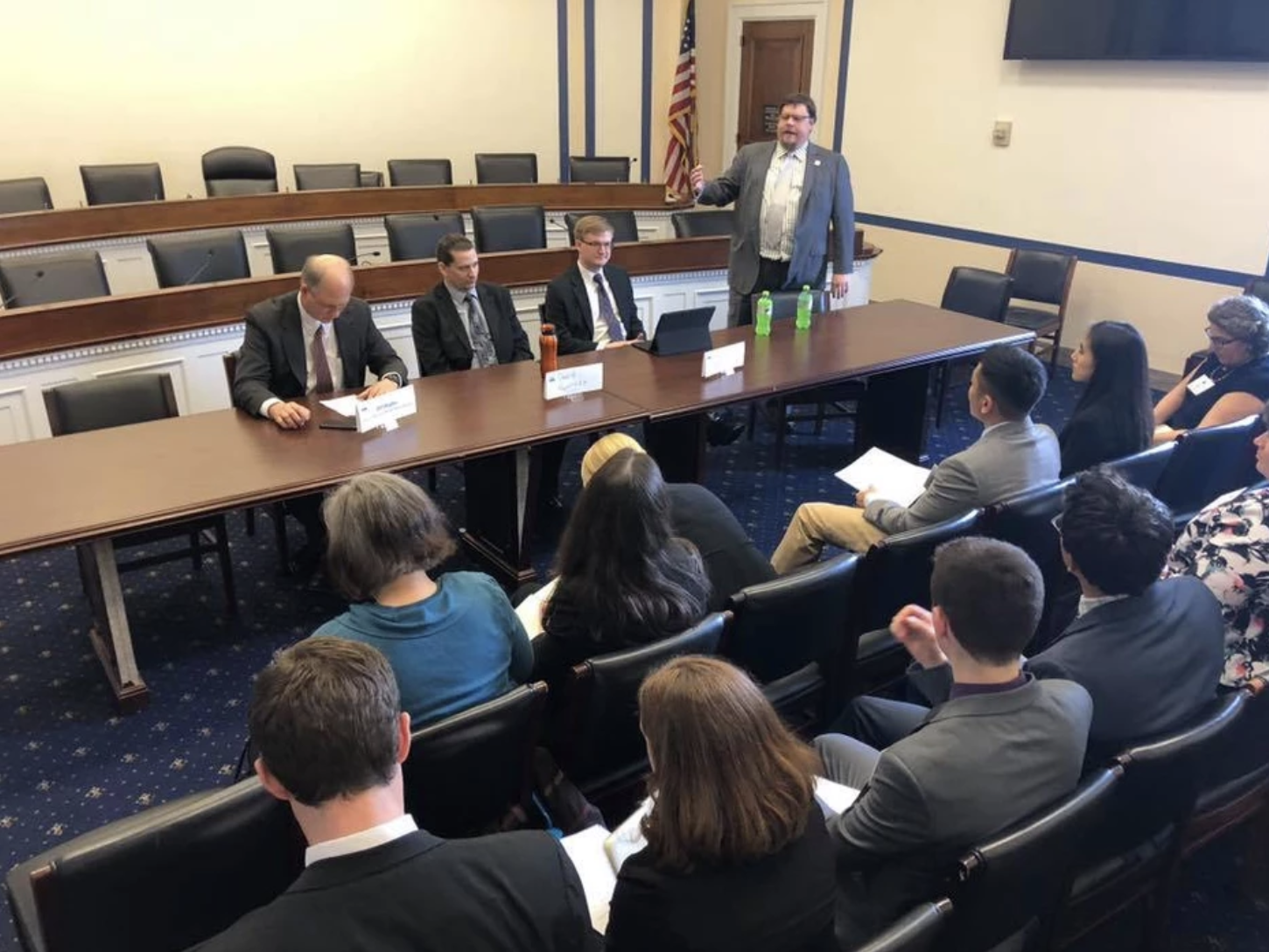


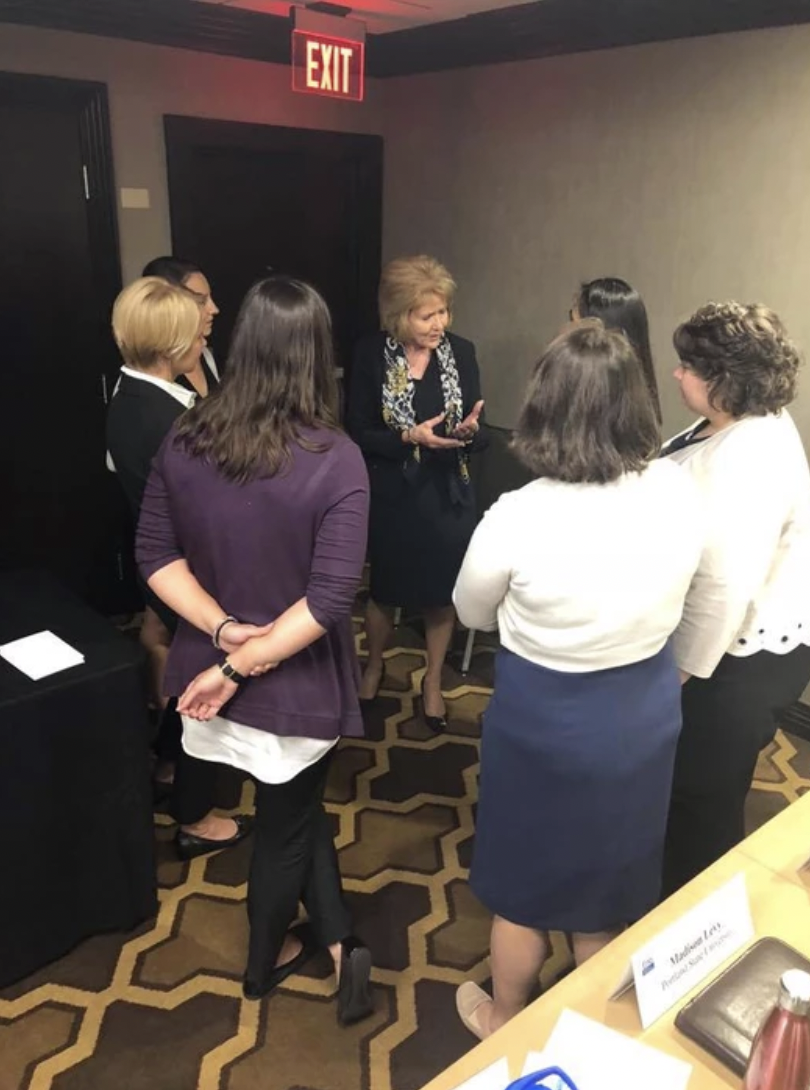


This year’s Eno Fellows heard from industry professionals from across the transportation industry including, non-profits, federal agencies, U.S. Representatives, lobbyists, the private sector, and many more. Topics such as federal funding, how lobbying really works, the state of the industry, aviation, and transportation technology were included throughout the week.
Four of this year’s fellows were sponsored; special thanks to Women’s Transportation Seminar, Council of University Transportation Centers, American Society of Civil Engineers, and Conference of Minority Transportation Officials.
The culmination of the LDC is the Future Leaders Dinner where Eno honored Matt Rose with the Eno Lifetime Achievement Award, Carolyn Flowers with the Friend of Eno award, and Robert Poole with the Thought Leader Award. The honorees met with the students in an intimate setting before the dinner to impart their career journeys and provide valuable insights and advice on the student’s journey ahead.
We would like to thank our reception sponsor, Venable, LLC, for providing such a magnificent evening to celebrate the students and the honorees.
“[The] best [thing] about the conference was the opportunity to interact with the major leaders in transportation, being able to interact with all these leaders and understanding their jobs and perceptions about policy was fantastic.”
2018 LDC Fellow
Washington, DC
“This was a great experience and I feel like I got a deep look at transportation policy especially given that I am getting my PhD. The panelists were inspiring and the program has sparked my interest in pushing my career towards policy.”
2018 LDC Fellow
Washington, DC
Lifetime Achievement: Matt Rose
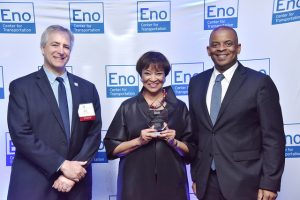
Friend of Eno: Carolyn Flowers
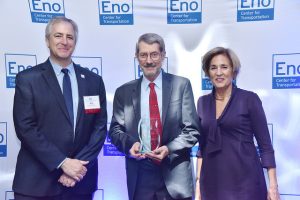
Thought Leader: Robert Poole
Looking Ahead to 2019:
Issues at the Forefront of Eno’s Agenda
Some of the issues that Eno has already identified as areas of focus for 2019 include:
Building a Network of
Innovative Professionals
Eno acts as the hub of an extensive network of transportation professionals. We convene and empower cross-sector networks of government, business, nonprofit, and philanthropic leaders at all levels. These leaders work together to solve problems, develop new solutions, and advocate for broader reforms. Eno’s board of directors, a board of advisors, and board of regents provide valuable input and advice
Board of Directors







Board of Advisors




















Board of Regents





Highlights from Engaging Our Network:
Thought Leadership + Professional Development

Special Edition
Women Take Over
In March 2018, Eno published the first Women Take Over edition of ETW. This special edition featured 12 external articles contributed by women leaders and experts across modes and has been collectively viewed more than 6,000 times since publication.
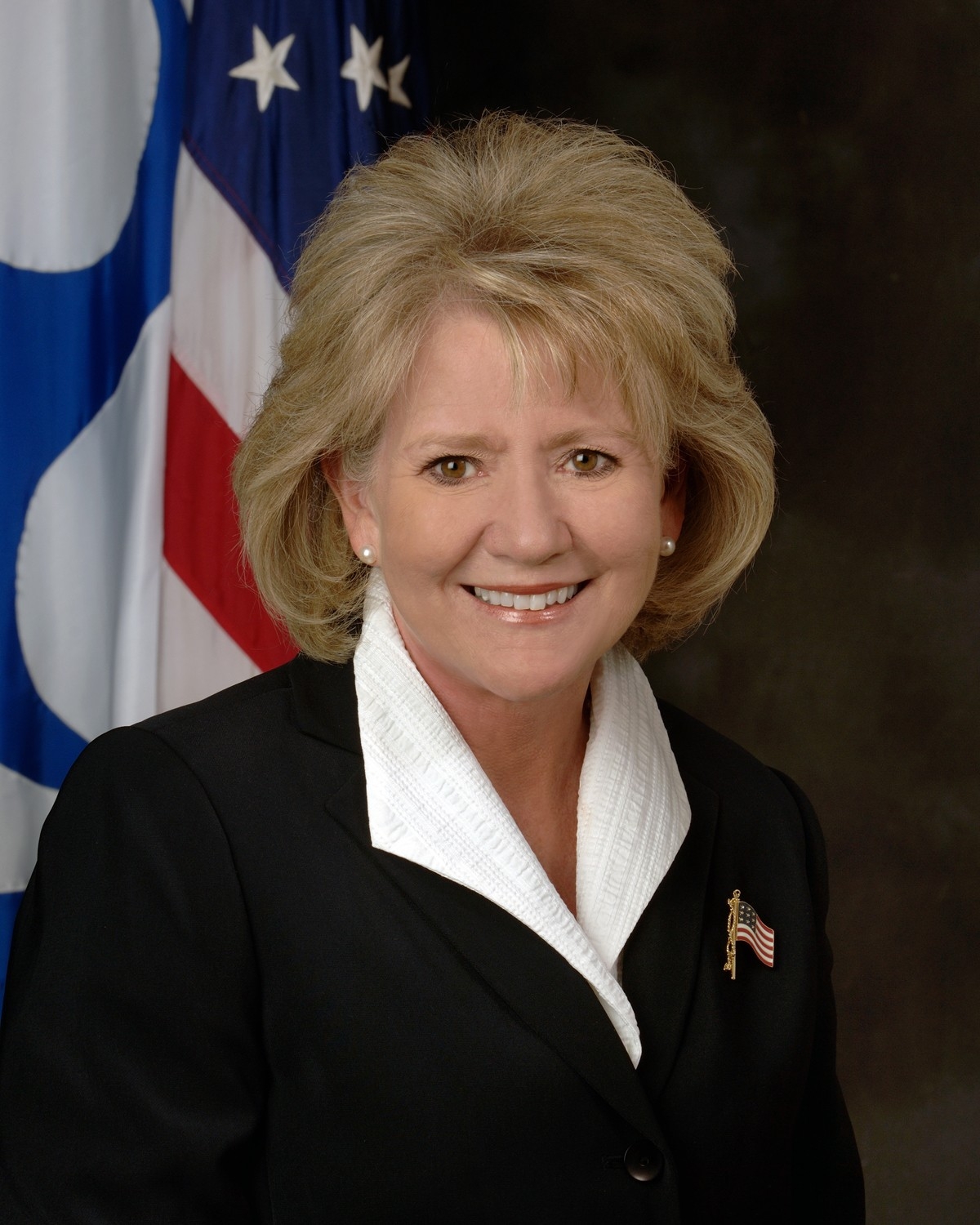
Guest Editor:
Mary Peters
Mary Peters
Fmr. Secretary of Transportation

Integrating Dockless Bikeshare in your Community
Stefanie Brodie
District Department of Transportation

Managing Transportation Infrastructure in the Digital Age
Tina Quigley
RTC of Southern Nevada

Building a Blueprint for Ending Roadway Fatalities
Deborah A.P. Hersman
Waymo

Promoting Upward Mobility Through Transportation Policy
Shima Hamidi
University of Texas at Arlington

COMTO Celebrates Women Who Move the Nation
JaLissa D. Coffee
COMTO

A Case for Gender Parity on Transportation Industry Boards
Diane Woodend Jones
Chairman of the Board, Lea+Elliott, Inc.

Private Activity Bonds Fuel Innovative Infrastructure Projects
Jennifer Aument
Transurban

Building a Pipeline of Talented Women in Transportation
Jannet Walker Ford
Cubic Transportation Systems

How LA is Adapting Urban Mobility for Our Digital Age
Seleta Reynolds
LA DOT

Good Public Policy Drives Freight Rail Investment
Amy Hawkins
BNSF

What’s the Big Deal About Celebrating Women’s History Month?
Linda Washington
The Washington Consulting Team

In 2018, Eno expanded our virtual professional development beyond policy through a leadership skills series for members and alumni. The Leadership Series feature virtual reading roundtables, which are book club-style webinars featuring an article on a rotating topic in leadership, and a larger continuing education speaker series that covers rotating transportation leadership topics, such as career management, labor relations, communication, delegation, and transit trends. The webinars provided alumni and members leadership lessons and an opportunity to network with fellow Eno members.
7 webinars
4 guest speakers
133 attendees















Inside Eno: Transparent + Independent
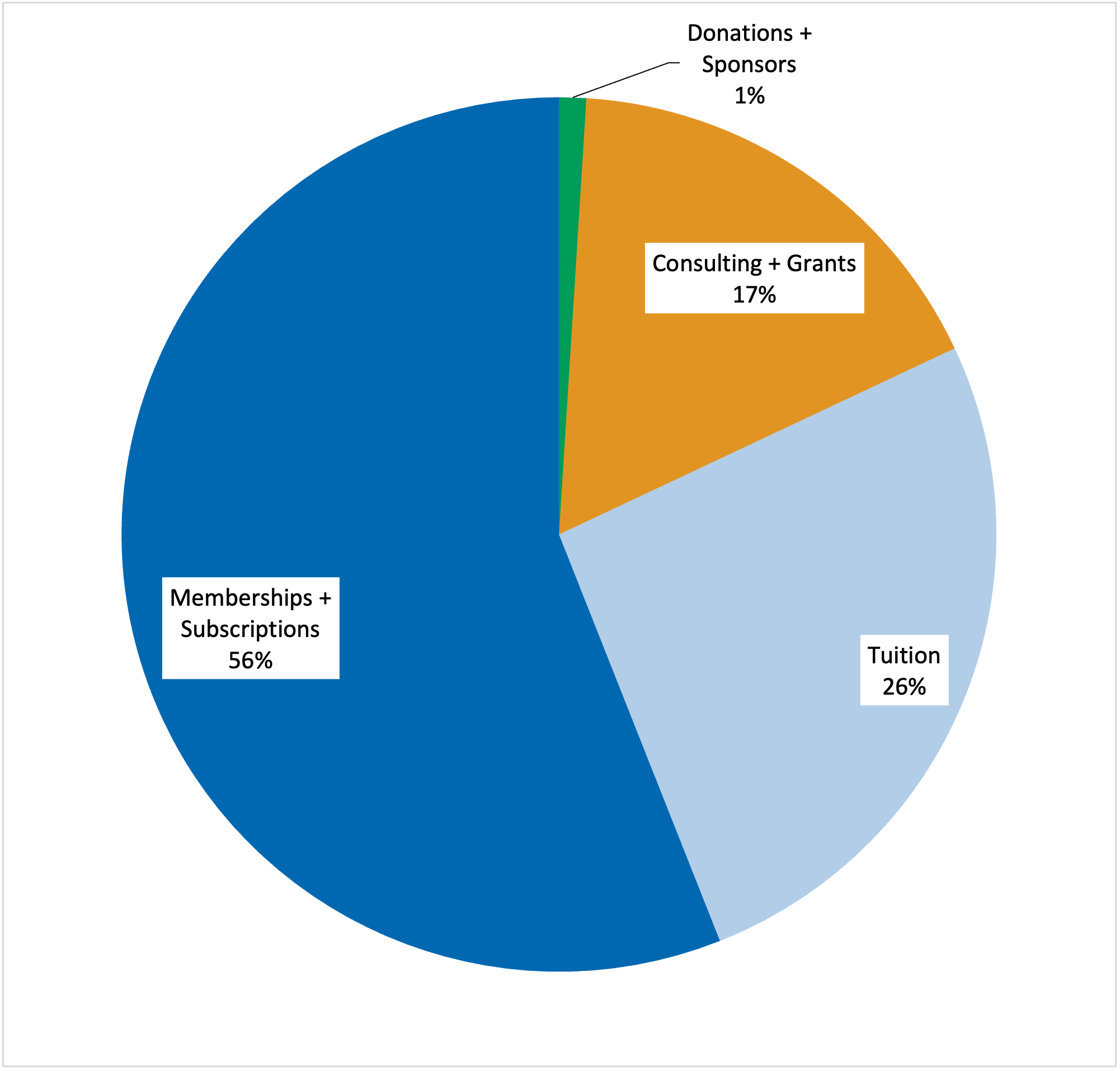
Thanks to the generosity of a diverse and growing number of partners and members across the transportation industry, Eno continues to deliver excellent research and analysis and top-notch professional development programs.
In all our endeavors, Eno focuses on our mission and is guided by our institutional values: integrity, independence, objectivity, quality, and relevance. We do not seek or accept financial support that would undermine those values or compromise our commitment to remain unbiased and independent.
Revenues
Program Expenses

Thanks to our supporters!
Titanium Members
$35,000/$50,000
Intel
STV
District Department of Transportation
Platinum Members
$17,500/$25,000
American Airlines, Inc.
Association of Equipment Manufacturers
BNSF
IATA
ON Semiconductor
Transurban
Uber Technologies
US Chamber of Commerce
Gold Members
$10,000/$15,000
Airlines for America
ALPA
ASCE
Daimler
Lyft
NATCA
National Association of Manufacturers
Southern California Association of Government
US Department of Transportation
Silver Members
$7,000/$10,000
AECOME-Washington DC
Cubic Transportation Systems, Inc
Foothill Transit
HDR, Inc.
JITI
NCDOT
Transdev
TxDOT
WSP
Bronze Members
$3,500/$5,000
AAA
Associated General Contractors
Amazon
Amtrak
Cambridge Systematics
Chambers, Conlon & Hartwell (CC&H)
Chicago Transit Authority
Florida Department of Transportation
General Contractor’s Association of New York
LA Metro
Legislative Services Library (MD)
Majestic Realty
Manatt, Phelps & Phillips, LLP
Maricopa Association of Governments
Montana DoT
National Governors Association
National Ready Mixed Concrete Association
National Stone, Sand & Gravel Association
New York State Department of Transportation
Northeast Corridor Commission
Northern Virginia Transportation Commission
Orange County Transportation Authority
Squire Patton Boggs (US) LLP
Thompson Coburn LLP
Transportation Trades Department
Grants + Contracts
Japan International Transport Institute
International Aviation Competition Analysis
Federal Highway Administration
Alternative Financing Methods
LA Metro Mobility on Demand
MOD Sandbox Pilot Project Evaluation
Transportation Research Board
State LTAP Workforce Report
British Embassy
Aviation Workforce Analysis
APCO Worldwide
Implications of Federal Funding Ban
Surdna Foundation
General Operating and Workforce
Summit Foundation
Congestion Pricing Strategies